Large-Diameter Piles
Large-diameter piles are foundation elements used in soils with limited bearing capacity, where structures are required to withstand high loads.
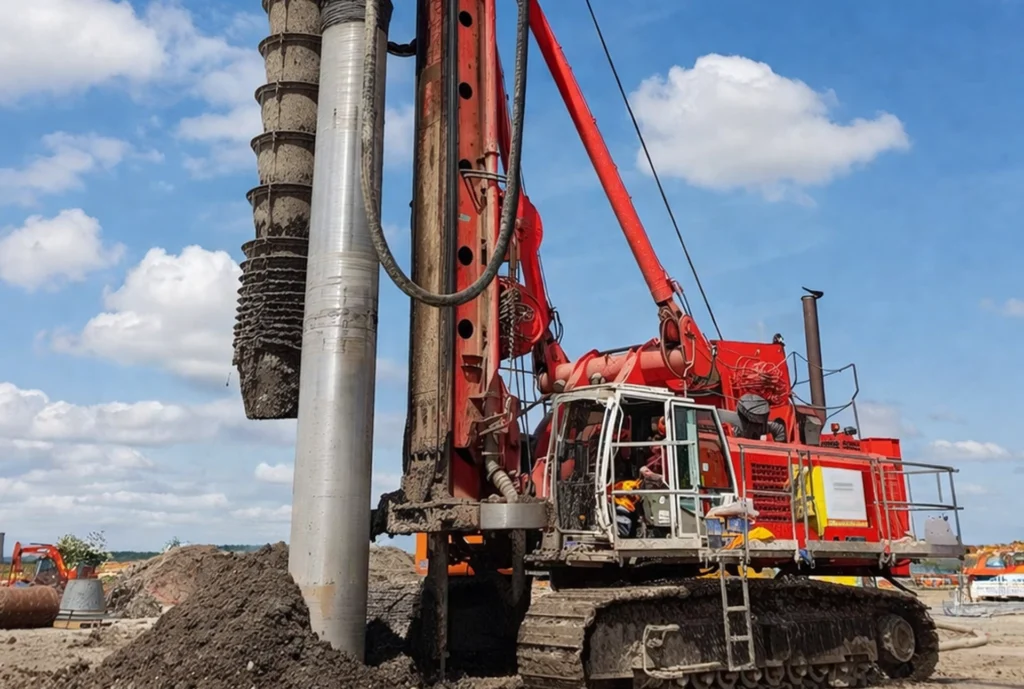
Constructed in reinforced concrete and generally ranging from 500 to 2000 mm in diameter, they can reach significant depths and provide high load-bearing capacity, ensuring stability even in complex geotechnical conditions.
The main construction methods used include CFA piles and FDP piles, selected according to the soil conditions and project requirements.

Construction Methods
CFA Piles (Continuous Flight Auger)
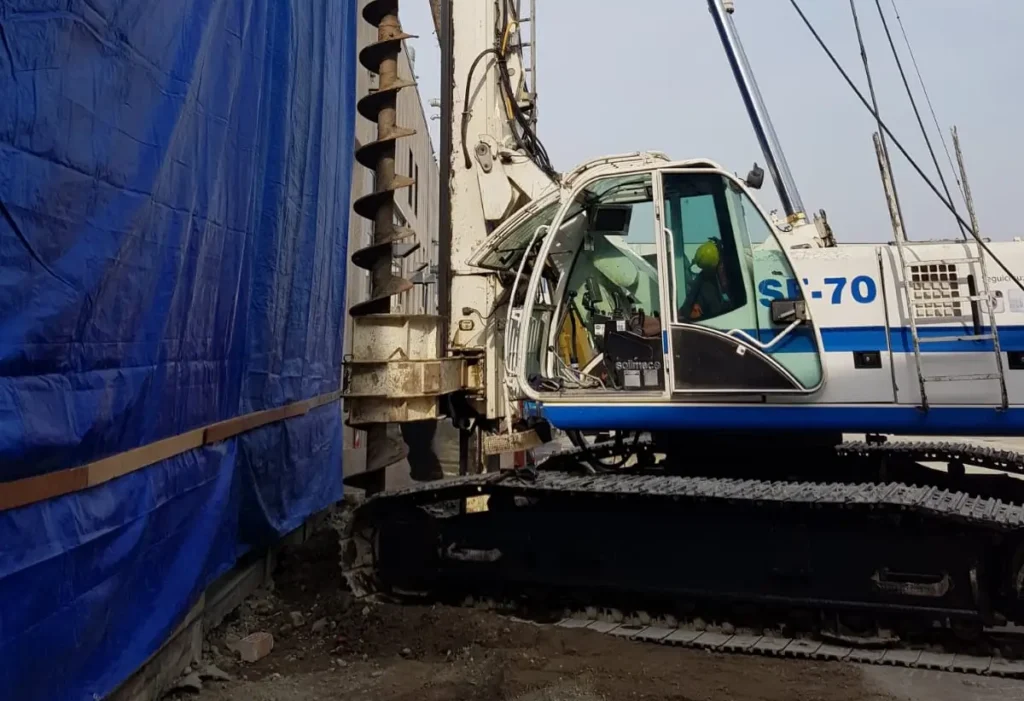
CFA piles are constructed using a continuous flight auger, which allows drilling to advance through the ground without the need for casing or bentonite slurry.
Once the design depth has been reached, the auger is withdrawn and, at the same time, the bore is filled with concrete pumped under pressure. Reinforcement is then installed.
This method is particularly suitable for:
- soft or loose soils
- projects requiring fast execution
- sites where ancillary operations need to be kept to a minimum

Construction Methods
FDP Piles (Full Displacement Piles)
FDP piles are constructed by rotating and pushing a special displacement tool into the ground, compacting the soil laterally without removing it.
Once the design depth has been reached, the tool is withdrawn and the bore is simultaneously filled with concrete pumped under pressure, followed by the installation of reinforcement.
Main advantages include:
- no spoil material
- reduced vibration
- improved geotechnical properties of the surrounding soil
- increased shaft resistance
 Micropiles and ground anchors
  Jet-grouting
  Hydraulic and Marine Works