Micropiles and ground anchors
Micropiles and anchors are key solutions in the field of special foundations, used for ground improvement and structural stabilisation.
Thanks to their versatility, they allow effective intervention in a wide range of operating conditions, including restricted spaces, existing buildings and complex geotechnical settings.

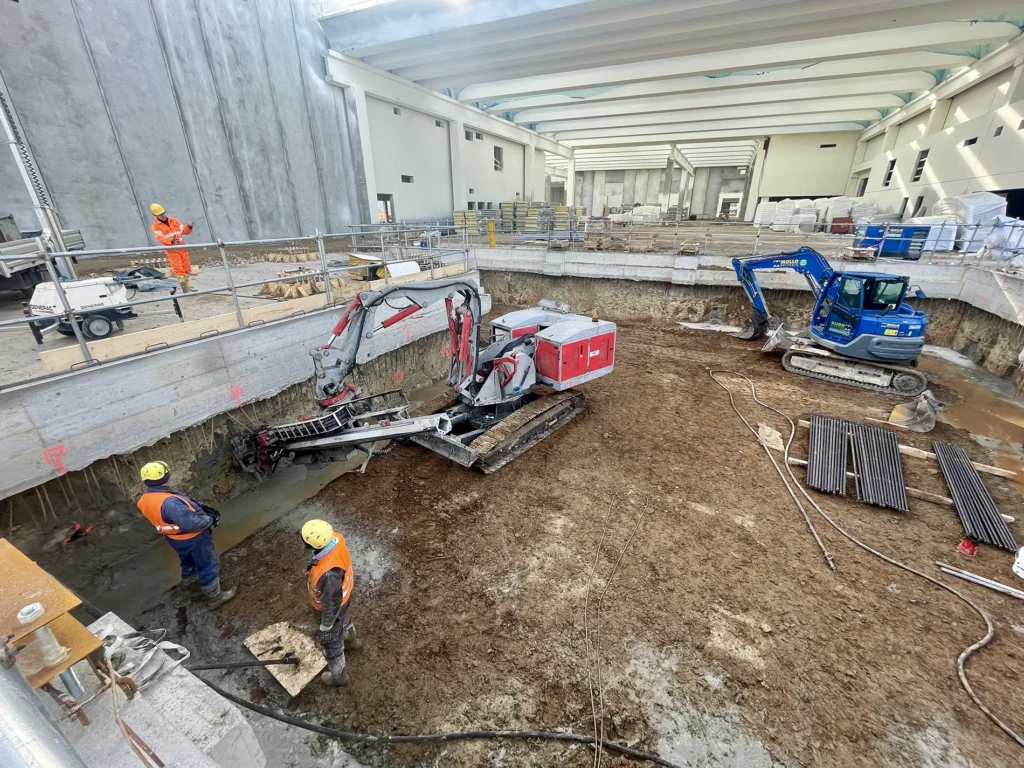
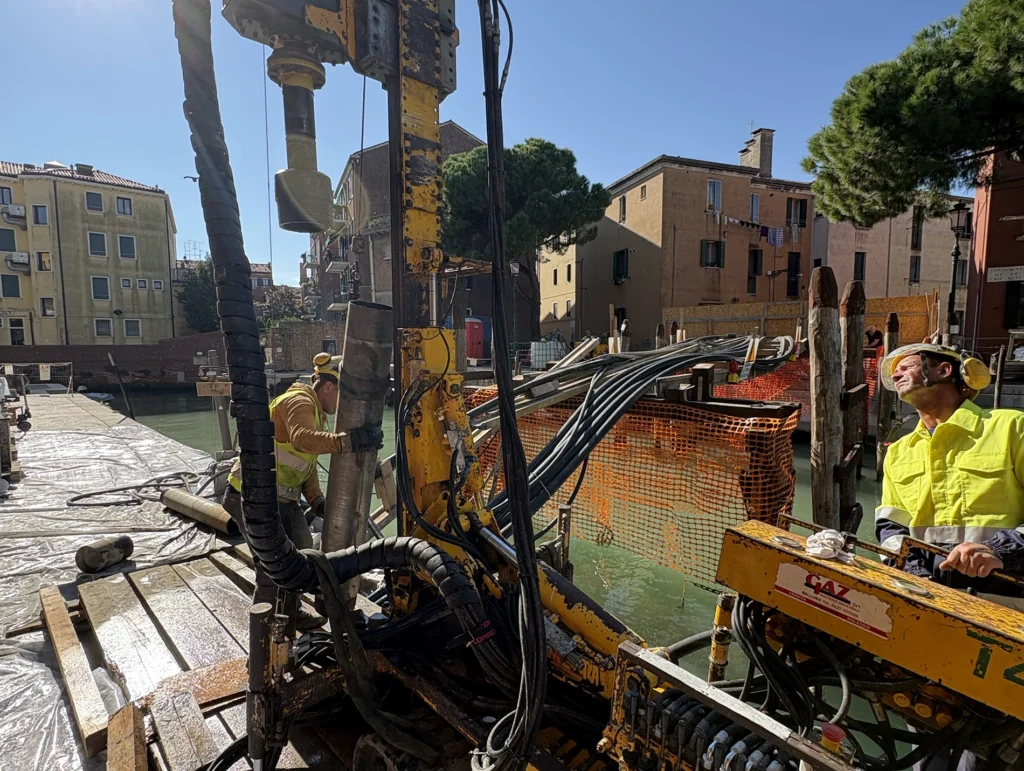
Micropiles
Micropiles are installed using vertical or inclined drilling, generally with a diameter of less than 350 mm, into which reinforcement elements are installed and cement grout is then injected.
Micropiles are widely used to strengthen existing foundations affected by differential settlement and to transfer loads to deeper, more competent soil layers.
Main applications include:
- structural strengthening of existing buildings
- works in restricted spaces
- urban and infrastructure projects
- stabilisation of excavations and slopes
Execution methods include rotary drilling, rotary-percussive drilling and self-drilling systems, which are particularly effective in loose or unstable soils.
Micropiles and ground anchors projects


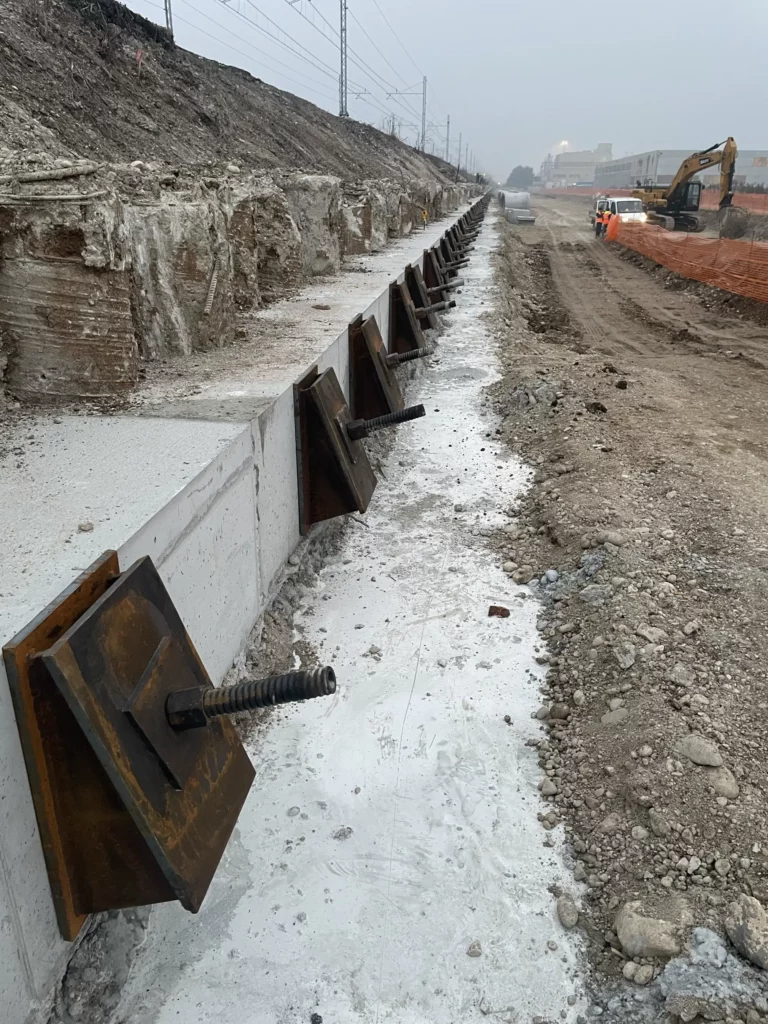
Anchors
Anchors are structural elements designed to work in tension, used to transfer loads to the ground and ensure the stability of structures.
They are commonly used to support diaphragm walls, retaining walls, and to stabilise slopes and excavations, helping control earth pressures.
They are installed in boreholes of varying diameter, within which an anchoring system made up of self-drilling bars or steel strands is placed.
From a functional perspective, anchors can be classified as:
- temporary anchors
- permanent anchors
Their effectiveness depends on the presence of a bonded length within the ground and a free length that allows loads to be transferred from the structure to the soil.
Micropiles and ground anchors projects Jet-grouting
  Large-Diameter Piles
  Hydraulic and Marine Works